Is a Dental Assistant Program Worth It in 2026? What the Data Says for Olympia
You’re weighing your options. Maybe you’re looking at a dental assistant program alongside a few other career paths, trying to figure out which one actually delivers a return on your time and money. That’s a fair question — and the answer comes down to numbers, not opinions.
Here’s what the data says about the value of dental assistant training in 2026, what you’ll actually learn, and what kind of career it leads to.
The investment: what a dental assistant program costs
Training costs vary depending on the type of program:
- Accelerated certificate programs (8–12 weeks): typically $2,000–$5,000
- Diploma programs (6–12 months): $5,000–$15,000
- Associate’s degree programs (1–2 years): $10,000–$25,000+
Olympia Dental Assistant School’s 12-week program falls into the accelerated category — focused, affordable, and designed to get you job-ready without unnecessary coursework or multi-year commitments.
The return: what dental assistants earn
According to the Bureau of Labor Statistics (BLS) and salary sites like Indeed and Glassdoor (2026):
- Entry-level: approximately $33,000–$40,000/year
- National median: approximately $46,000–$48,000/year
- Experienced / specialty: $52,000–$62,000+/year
If you complete a 12-week program and start working within a few months of enrollment, you could earn $28,000–$35,000+ in your first partial year — likely exceeding your total training investment many times over.
What a quality dental assistant program teaches you
Not all programs are equal. The ones that produce the best outcomes cover both the clinical and administrative sides of the role:
Clinical skills
- Chairside assisting — supporting the dentist during procedures with instrument passing, suction, tissue retraction, and material preparation
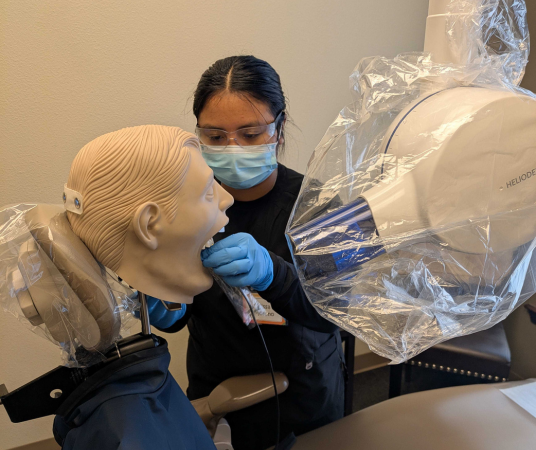
- Dental radiography (X-rays) — proper technique, positioning, safety protocols, and image evaluation
- Infection control — instrument sterilization, operatory disinfection, OSHA compliance, PPE use
- Dental materials — mixing impressions, preparing cements, handling composites, fabricating temporaries
- Patient preparation — seating patients, taking medical histories, explaining procedures, managing anxiety
Administrative skills
- Scheduling and managing appointments
- Updating dental records and charting
- Verifying insurance and processing claims
- Answering phones and coordinating referrals
- Maintaining HIPAA compliance
Certification preparation
The strongest programs prepare you for the Registered Dental Assistant (RDA) exam — a credential that directly impacts your hiring speed and salary.
Five signs a dental assistant program is worth your time
1. Hands-on training in real dental offices
Programs that train you inside actual working dental practices — not just classroom labs — produce graduates who are confident and competitive from day one. Olympia Dental Assistant School partners with local dental offices so your training happens in the environment you’ll work in.
2. A clear path to certification
If the program includes RDA exam preparation, you graduate with a credential that employers recognize and that increases your pay.
3. A realistic timeline
You don’t need two years to learn this career. A focused 12-week program covers every essential skill without padding the schedule with unrelated coursework.
4. Transparent, affordable pricing
You should know the total cost upfront — no hidden fees, no surprises after enrollment. Programs that cost under $5,000 with payment plans available let you start your career without student debt.
5. Career support after graduation
Resume help, interview preparation, and job search guidance are part of a strong program — not afterthoughts.
The job market for dental assistants in 2026
The demand side of the equation is strong:
- The BLS projects dental assistant employment to grow faster than average through 2032
- Dental offices across Olympia and nationwide are consistently hiring trained assistants
- Population growth and expanded access to dental care continue to drive demand
- Credentialed assistants with real clinical experience are what practices are looking for
Red flags in dental assistant programs
Not every dental assistant program delivers. Watch for:
- No hands-on clinical component — you can’t learn chairside assisting from a laptop
- Hidden fees — low tuition that grows after you add materials, labs, and exams
- No certification pathway — without RDA prep, your training carries less weight
- Unrealistic promises — “complete in 2 weeks” or guaranteed employment claims
- No career support — if they hand you a certificate and say good luck, keep looking
What dental assistants say about the career
The data is compelling, but so are the reasons people stay in the field:
- Variety — no two days are the same. The mix of clinical procedures, patient interaction, and office tasks keeps things engaging
- People-centered work — you’re helping patients every day, often calming their anxiety and making clinical experiences more comfortable
- Stability — dental offices run on predictable schedules, with minimal overtime and no overnight shifts
- Growth — lead roles, specialty practices, expanded functions, and management positions are all accessible paths
- Speed — you can go from enrollment to your first paycheck in a matter of months
The complete timeline: enrollment to employment
| Phase | Duration |
|---|---|
| Research and enrollment | A few days to 1 week |
| Training | 12 weeks |
| Certification exam | 1–3 weeks post-graduation |
| Job search and hiring | 2–4 weeks |
| Total | Approximately 4–5 months |
That’s the entire path from deciding to start to collecting your first paycheck as a dental assistant. Compare that to careers requiring 1–4 years of school plus months of job searching after graduation.
Who benefits most from a dental assistant program?
- Career changers — looking for a fresh start without going back to school for years
- Working adults — programs with flexible schedules let you keep earning while you train
- Parents and caregivers — dental offices run business hours, so the career fits around family life
- Recent graduates — an alternative to expensive four-year degrees with uncertain job markets
- Anyone who wants to work in healthcare — a fast, affordable entry point with real growth potential
Common concerns (and honest answers)
“Is 12 weeks really enough training?” When every hour is focused on job-essential skills — and your hands-on practice happens in real dental offices — yes. The curriculum is designed to cover exactly what dental offices expect from entry-level candidates, without the filler content that pads longer programs.
“Will employers take me seriously without a degree?” Dental offices hire based on skills, certification, and clinical experience — not academic degrees. An RDA credential and hands-on training in real dental offices carry more weight than a two-year degree with no clinical exposure.
“What if I have no science background?” You don’t need one. Dental assistant programs teach you the relevant anatomy, terminology, and clinical knowledge from the ground up. No prerequisites required.
“Can I afford the training?” Accelerated programs typically cost under $5,000 — with payment plans available. Most graduates finish debt-free, which means every dollar you earn goes toward building your life, not paying back loans.
“What’s the job market like?” Strong and growing. The BLS projects dental assistant employment to increase faster than average through 2032. Dental offices across Olympia and nationwide are consistently hiring — and trained, certified assistants are what they’re looking for.
“What will I actually do all day?” A mix of hands-on clinical work, patient communication, and office tasks. You’ll assist the dentist during procedures, take X-rays, sterilize instruments, update records, and help patients feel comfortable. The variety is what keeps most dental assistants engaged year after year.
Ready to see if it’s worth it for you?
Olympia Dental Assistant School offers a 12-week dental assistant program with hands-on training in real dental offices, certification preparation, and a cost designed to let you graduate debt-free.
- Explore the program: Program details
- Review tuition and payment options: Tuition
- Talk to our team: Contact
- Apply: How to apply
You're 12 weeks from the dental assistant career you deserve.